
Trinity logged 42 grades at 9 and Sevenoaks School put 47 per cent of all entries there. Every figure five schools published, and the rows that judge them.
Year 11 collected their GCSEs on Thursday 20 August, and five Sevenoaks schools have now published figures. They are not a league table. Each school reports on a different measure, and only some of those measures have a national equivalent, so this is what each one actually said, followed by the national rows that give it meaning.
Trinity School: 124 grades at 8 or 9, and 42 at the top
Trinity, the free school on Seal Hollow Road, published ratios rather than percentages. It says almost one grade in five was a 7 or better, and nearly four in every five a 4 or better. Behind those, the year group took 124 grades at 8 or 9, including 42 at grade 9. The school also reports a rise in the share of pupils reaching grades 4 and 5 in their subjects, and says it has been rated above average by the Department for Education for GCSE progress for three years running. (Trinity School, GCSE Results, 20 August 2026)
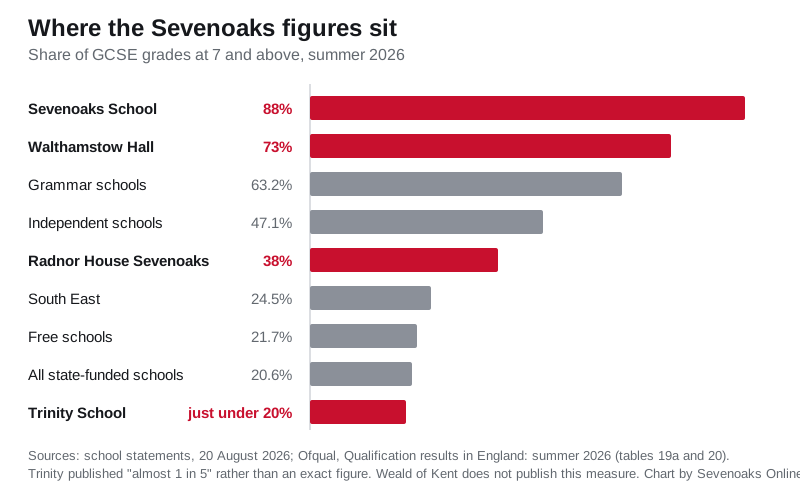
Set against Ofqual’s national tables, the interesting half of that is the pass rate rather than the top grades. Nearly four in five grades at 4 and above sits roughly ten points clear of the 68.2 per cent recorded across free schools in England, and further clear of the 66.1 per cent across all state-funded schools. The 7-and-above share, at just under one in five, is a shade below the 21.7 per cent free-school figure. The comparison is approximate because the school gave ratios, not decimals.
James Bunting took a grade 9 in all eleven of his subjects, including maths, further maths, the three separate sciences, computer science and Spanish. Dr Matthew Pawson, the headteacher, said the results were “a testament to the effort, resilience and ambition they have shown throughout their GCSEs”.
Sevenoaks School: 47 per cent of all entries graded 9
Sevenoaks School reports that 88 per cent of all its GCSE and IGCSE entries were graded 9, 8 or 7 (or A* and A on the IGCSE scale), that 72 per cent were graded 9 or 8, and that 47 per cent were graded 9. A hundred and four students took ten or more grades at 9, 8, 7 or A*/A, and 17 of those took ten or more grade 9s or A*s. Every pupil there sits at least ten subjects, including maths, both English papers, all three sciences, a modern language and a humanity. (Sevenoaks School, GCSE and IGCSE results 2026)
That 88 per cent is close to double the 47.1 per cent that independent schools across England managed at 7 and above, and comfortably above the 63.2 per cent recorded by grammar schools. The headmaster, Jesse Elzinga, tied the result to the sixth form: every Sevenoaks student goes on to the International Baccalaureate rather than A levels.
Walthamstow Hall: 73 per cent of grades at 9 to 7
The independent girls’ school on Holly Bush Lane says 73 per cent of all grades were 9 to 7 and 50 per cent were 9 or 8, with just under a quarter of the year group scoring 8s and 9s across their best eight subjects. More than half the grades awarded were 9s in religious studies, biology, drama, English literature, German and Latin. (Walthamstow Hall, GCSE Results 2026, 20 August 2026)
The school’s own published subject table for 2025 makes the year-on-year move checkable: 310 of 442 grades that summer were 9 to 7, which is 70.1 per cent. This year’s 73 per cent is up about three points on that. (Walthamstow Hall, GCSE Results 2025 by subject)
Louise Chamberlain, the headmistress, said the results reflected “the way in which our community enables girls to aspire and to flourish”.
Radnor House Sevenoaks: a third straight year of growth, and a value-added score
Radnor House, at Combe Bank in Sundridge, put 85 per cent of grades at 9 to 5, five percentage points up on last year, with 62 per cent at 9 to 6 and 38 per cent at 9 to 7. It also published a provisional value-added score of +0.8, meaning pupils averaged almost a full grade higher per subject than students nationally with the same starting points. (Radnor House Sevenoaks, GCSE results, August 2026)
Radnor is a non-selective independent school, and the value-added figure is the number to read here rather than the grade share. Its 38 per cent at 9 to 7 sits below the 47.1 per cent independent average, but that average is dominated by schools that select hard at eleven. David Paton, the head, called the value-added uplift “a strong testament to the efforts of our dedicated staff, supportive parents and, of course, our incredible students”.
Weald of Kent: 381 grades at 9, and an Attainment 8 of 67.35
Weald of Kent Grammar School runs a Sevenoaks site on Seal Hollow Road alongside its Tonbridge one, and its figures cover both. It reports 381 grades at 9, which it puts at 13 per cent of all grades, an Attainment 8 score of 67.35, and 92.3 per cent of students at grade 9 to 5 in both English and maths. Twenty-nine per cent of students averaged a grade 8 across the board. Ninety-four per cent were entered for the English Baccalaureate, with an EBacc average point score of 6.54. (Weald of Kent Grammar School, A Level and GCSE results)
None of those measures appear in the Ofqual tables, which is why Weald of Kent is absent from the chart above. Attainment 8 and the English and maths threshold come from the Department for Education’s performance tables, and the confirmed national figures for 2026 will not be published until the autumn.
The schools that published nothing
Knole Academy, the town’s other large non-selective state secondary, had posted no 2026 GCSE figures when we checked on 21 August. Its news feed has not been updated since 8 May. Orchards Academy in Swanley blocks automated access to its website, so we could not confirm either way.
That is worth stating plainly rather than leaving as a gap. A results-day roundup that only carries the schools with a press office is a roundup of marketing departments, not of the town’s Year 11.
What happened nationally, and in the South East
Ofqual published the England-wide figures at 9.30am on results day. Across the country, 5,720,045 GCSE results went to 1,047,750 students at 6,040 schools and colleges, up from 1,019,010 students last year.
The South East came second only to London on both headline measures, and barely moved:
| Region | Grade 7 and above | Grade 4 and above |
|---|---|---|
| London | 28.6% | 71.7% |
| South East | 24.5% | 69.9% |
| East of England | 22.0% | 67.6% |
| South West | 21.0% | 68.3% |
| Yorkshire and The Humber | 19.0% | 64.2% |
| North West | 18.9% | 63.9% |
| West Midlands | 18.3% | 62.4% |
| East Midlands | 18.2% | 65.0% |
| North East | 17.7% | 65.2% |
Read at face value the South East slipped a tenth of a point on both measures against 2025. Strip out the resit candidates and it went the other way: among 16-year-olds only, the region took 25.8 per cent at grade 7 and above and 73.2 per cent at grade 4 and above, both a fraction up on last year. Those are the figures to use when comparing a school, because a school’s cohort is 16-year-olds. (Ofqual, Qualification results in England: summer 2026, tables 19a and 19b)
Why you cannot rank these schools against each other
Three problems sit in the way, and no results-day round-up can honestly get past them.
They report different things. Sevenoaks School and Walthamstow Hall publish the share of grades at 9 to 7. Radnor House leads on 9 to 5. Weald of Kent leads on Attainment 8 and on English and maths thresholds. Trinity publishes ratios. Only the first of those has a clean national counterpart.
The national rows differ enormously by type of school. Ofqual’s table 20 sets out the share of grades at 4 and above in England this summer: grammar schools 97.4 per cent, independent schools 88.4 per cent, local authority comprehensives 68.6 per cent, free schools and academies both 68.2 per cent, secondary moderns 64.9 per cent. A selective school beating a comprehensive tells you about the admissions test, not about the teaching. Benchmark each school against its own row.
Two of those rows are not schools at all. Sixth form colleges come out at 32.2 per cent and further education establishments at 17.6 per cent. Those are resit centres, where adults and post-16 students retake English and maths they did not pass first time. Reading them as failing institutions is the single most common misuse of that table.
There is also no figure for Sevenoaks. Ofqual publishes an interactive map by administrative area, but it assigns each result to a place using the postcode of the exam centre, not where the student lives. A district with a large selective or independent school therefore ranks high on other people’s children. We are not going to restate a district ranking built that way. (Ofqual Analytics)
What to do if a grade looks wrong
The priority review of marking that closed on 20 August covers A levels, AS levels and level 3 vocational qualifications only. It does not cover GCSEs, and sending a family at that deadline wastes the week.
For GCSEs, both post-results services close on 24 September 2026: a clerical re-check, which confirms the marks were added up and transferred correctly, and a review of marking, which returns a decision within 20 calendar days. Neither is something a student requests directly. Both go through the school’s exams officer, and a review of marking needs the student’s written consent first, because there is no grade protection: a grade can go down as well as up. (JCQ, post-results services)
If English language or maths came in below a grade 4, there is a November resit series for both subjects. Entries go through the school, so speak to the exams officer rather than an awarding body, and do it early in September.
What it means for you
Sixth-form and college places are the immediate question. Trinity, Weald of Kent and Sevenoaks School all run their own sixth forms, and Radnor House says results day is the start of the next stage for many of its Year 11. For students who did not get the grades a course asked for, the school that offered the place is the one that can waive or vary the condition, and a phone call on the day usually beats an email.
For everyone else, our reporting on Sevenoaks A level results 2026 covers the other half of the exam season, and our Sevenoaks community news roundup tracks the rest of the year. Confirmed school performance figures, the ones the Department for Education publishes rather than the ones schools publish about themselves, are due in the autumn.
Frequently asked questions
What counts as a pass at GCSE?
Grade 4. The Department for Education “recognises grade 4 and above as a ‘standard pass’ in all subjects”, and its own factsheet says the bottom of grade 4 is aligned with the bottom of the old grade C. Grade 5 is described as a strong pass, and it is the bar many sixth forms set for their own courses.
Which Sevenoaks schools published 2026 GCSE results?
Five: Trinity School, Sevenoaks School, Walthamstow Hall, Radnor House Sevenoaks and Weald of Kent Grammar School, which covers both its Tonbridge and Sevenoaks sites in one statement. Knole Academy had published nothing when we checked on 21 August.
Is there a GCSE pass rate for the Sevenoaks district?
No published one. Ofqual’s data tables stop at region, and its interactive map assigns each result to an area by the postcode of the exam centre rather than the student’s home, so a district with a large selective or independent school scores high on pupils who travel in. The nearest honest figure is the South East: 24.5 per cent of grades at 7 and above, 69.9 per cent at 4 and above.
How do I challenge a GCSE grade?
Through the school’s exams officer, not directly. A clerical re-check and a review of marking both close on 24 September 2026, and a review is decided within 20 calendar days. The student has to give written consent first, because a grade can go down as well as up. The priority service that closed on 20 August does not cover GCSEs.
When are the November GCSE resits?
English language and maths can both be retaken in the November series. Entries go through the school rather than the awarding body, so speak to the exams officer early in September.
Sources
- Ofqual, Qualification results in England: summer 2026, published 20 August 2026. Table 3 for the national totals, tables 19a and 19b for the regional figures, table 20 for the centre-type figures
- Trinity School, GCSE Results, posted 20 August 2026
- Sevenoaks School, GCSE and IGCSE results 2026
- Walthamstow Hall, GCSE Results 2026, and its 2025 results by subject for the year-on-year comparison
- Radnor House Sevenoaks, GCSE results
- Weald of Kent Grammar School, A Level and GCSE results
- JCQ, post-results services, for the summer 2026 deadlines
- Department for Education, GCSE factsheet for parents, for the grade 4 standard pass and its alignment with the old grade C
- Ofqual Analytics, GCSE outcomes by administrative area
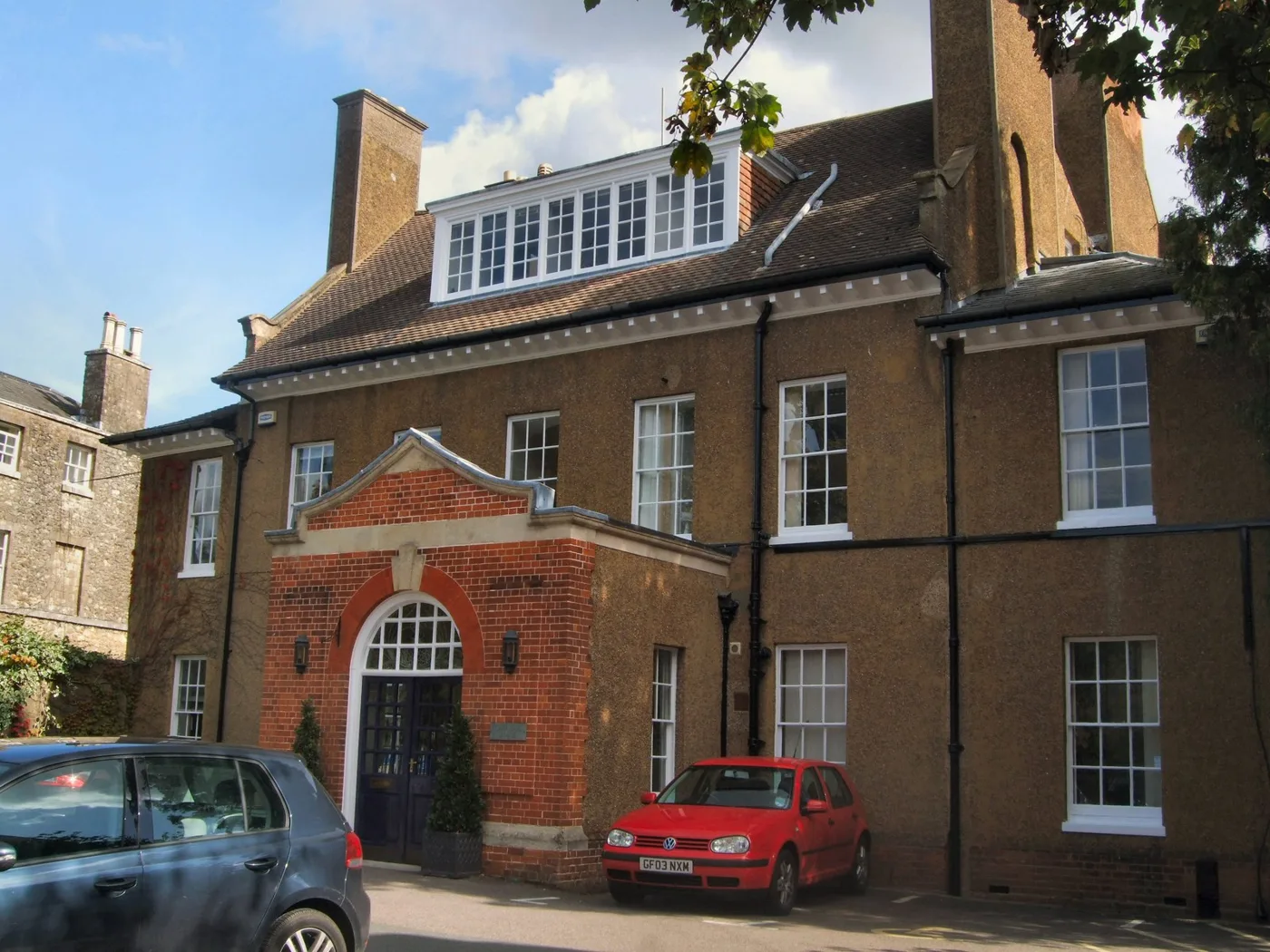
Image: Sevenoaks School by Paul Gillett, CC BY-SA 2.0, via Geograph. Chart by Sevenoaks Online.
Have your say